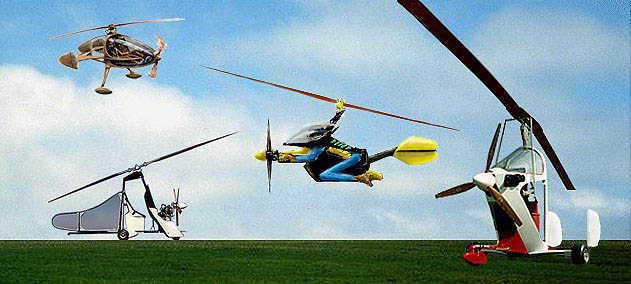
The story of David Gittens, the Ikenga autogyros, and how a decades-long friendship carried a piece of aviation history from Sarasota to the American Helicopter Museum.
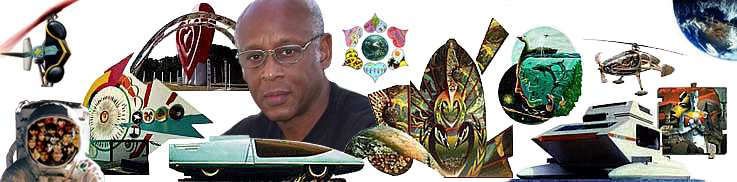
Image courtesy of the David Gittens Personal Archive. All rights reserved by the respective copyright holders.
Ask David Gittens what advice he gives kids who have a dream, and he doesn’t hesitate:
“If you have a dream, jump off the cliff with it, and learn to fly before you hit the ground.”
He would know. He’s been building the aircraft, other artifacts, and processes this way his entire life.
David encourages students to do the same with their creative passions, be that science, technology, or the arts. He is a designer, photographer, and self-taught aircraft builder whose Ikenga autogyros have earned a place in the Smithsonian and, most recently, the American Helicopter Museum in Pennsylvania.
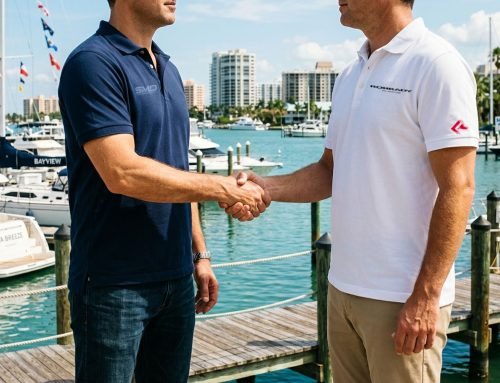
That last chapter began right here in Sarasota, inside our studio, because of a friendship between David and ROBRADY CEO / Design Director Rob Brady that has run alongside both of their careers. Ask David about that friendship and he’ll tell you, with complete sincerity, that he and Rob are brothers across many lifetimes.
Sit in a room with the two of them, trading stories about first builds and near misses, and you stop wanting to argue the point. Some collaborators you find.
Some, David would say, find you again. But to understand why this machine belongs in a museum, you have to understand the man who built it.
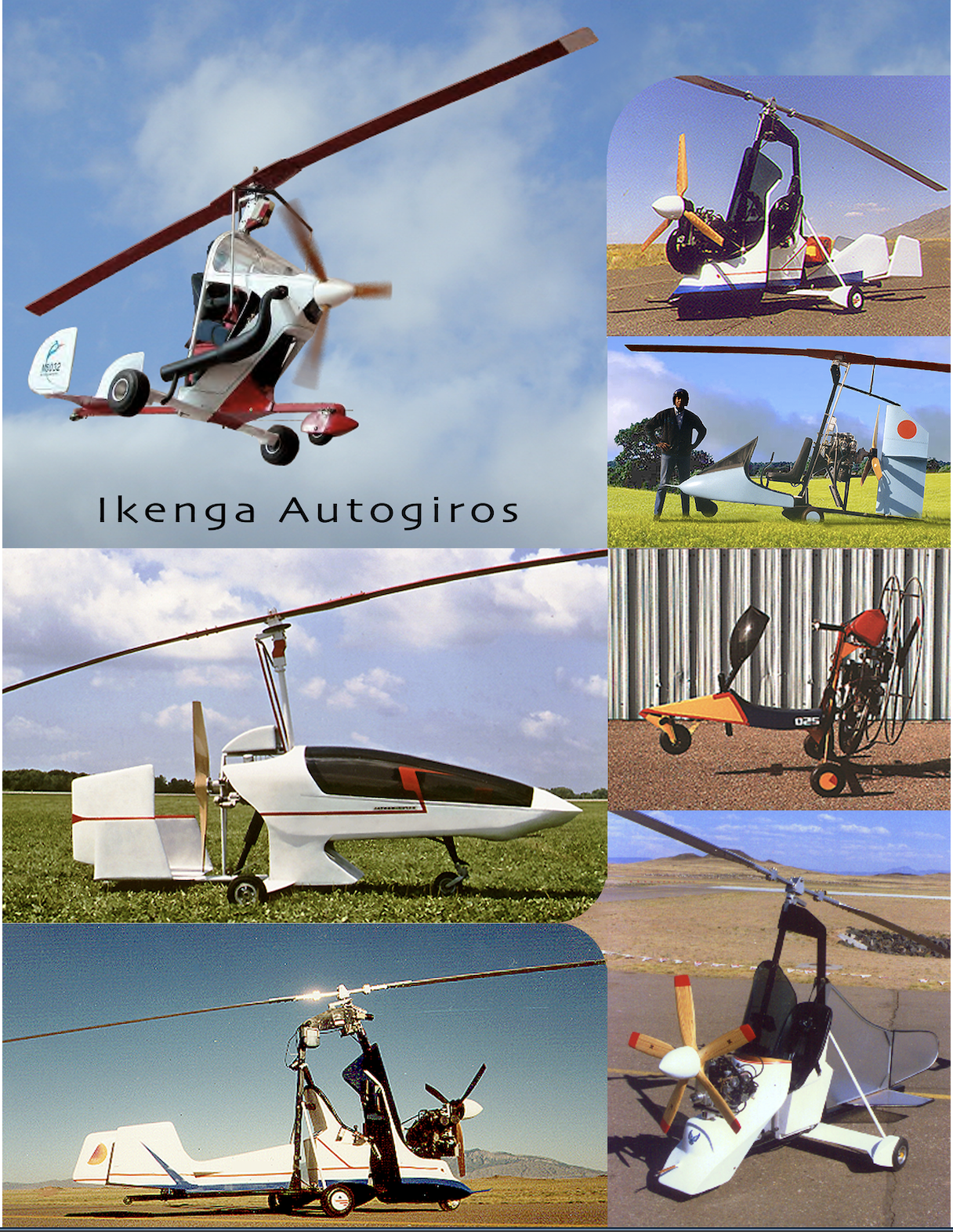
Image courtesy of the David Gittens Personal Archive. All rights reserved by the respective copyright holders.
A Kid from Brooklyn Who Couldn’t Stop Shaking
David grew up in Brooklyn with Tourette Syndrome, wearing a dunce cap and addressing learning disabilities at a time when neither had a name that anyone around him understood. School days were difficult, and approaching assigned work conventionally was non-existent.
So, he went where his eye could speak for him: art design, photography. Even that had limits as he grew into 1950s and 1960s America. As a Black photographer, David was hired to shoot ads aimed at Black audiences as industry racism prohibited him from market access. So in the mid-sixties, he left for London and hesitated to look back.
Within six months of arriving, his work for the top magazines of Swinging London had taken him from a little money to buying his first Aston Martin. It was a magazine assignment that changed everything. Sent by Queen (Harper’s) to photograph models with exotic sports machines across England, David found himself in 1965 at the estate of Wing Commander Ken Wallis, the aviator behind Little Nellie, the autogyro from the James Bond film You Only Live Twice.
Standing in a barn full of these amazing and elegant rotorcraft, David listened as Wallis told him how these simple aircraft could one day serve utility missions across the developing world. That idea became David’s north star and Ken a mentor: a safe, affordable rotorcraft that could carry medical teams and equipment to remote villages no runway could reach.
He took the idea to heart and within a month, with no autogyro experience whatsoever, he had his first autogyro design contract with a firm from Blackpool. However, shortly thereafter an opportunity to design and manufacture a series of innovative automobiles intervened, and David’s attention turned to this with a passion; and it would be twenty years before the opportunity and the funding came to him, which seeded the Ikenga aircraft and autogyro design company.
Importantly, the name Ikenga came to David in 1966 to define his British/American car project decades before he understood it. However, a DNA test would later reveal his own roots in the Igbo culture of Eastern Nigeria, where the Ikenga is the ceremonial figure embodying humanity’s creative life force. He had named his aircraft and other creations after his own purpose without knowing it.
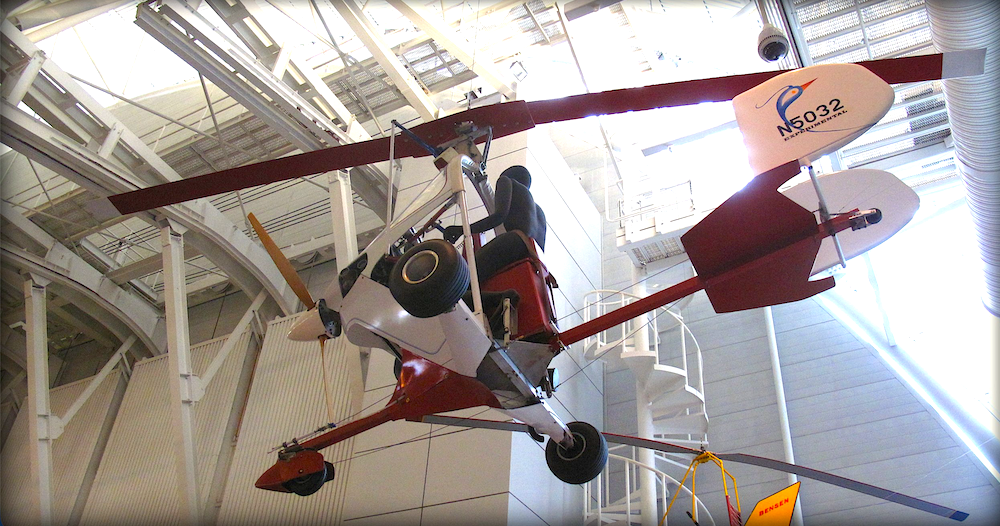
Ikenga 530Z autogyro on exhibit in the Smithsonian NAASM. Image courtesy of the David Gittens Personal Archive. All rights reserved by the respective copyright holders.
The $25,000 Lunch
Years later, back in the United States and working as a sales manager at a Grey Market Mercedes dealership in Santa Fe, David was still carrying the autogyro dream. One of his clients, a businesswoman from Canada, invited him to lunch. He thought he was about to sell her a G-Wagen.
Instead, she asked about the aircraft he kept talking about. “Can you really build it?” “How much money would it require?” He told her: about $25,000 in seed money. She took out her checkbook, wrote the check on the spot, and said, “Here. Go build your aircraft.” With that backing, David formed a company called Gyro 2000 and assembled a team of aeronautic engineers and gyroplane builders to give a first sound foundation to his vision. Their first aircraft, Wind Dancer, took shape between 1985 and 1986: a Mazda rotary-powered single-seater with a sleek enclosed cockpit unlike anything the sport gyroplane world had seen. It drew crowds and acclaim at the 1986 Oshkosh airshow, but it was too complex and costly to produce as a kit. So David did what good designers do. He answered his own question and started over, this time chasing radical simplicity. The result was the Ikenga 530Z: a 300-pound aircraft of chromoly steel and fiberglass, capable of 125 miles per hour, with the pilot riding motorcycle-style and steering the rudders with their heels. While most gyroplane engine/prop pushed from behind the pilot, the Ikenga 530Z pulled with a front-mounted tractor propeller and an added horizontal stabilizer, making it more stable, more efficient, and well suited to the various climates and rough fields of the developing nations it was designed to serve.
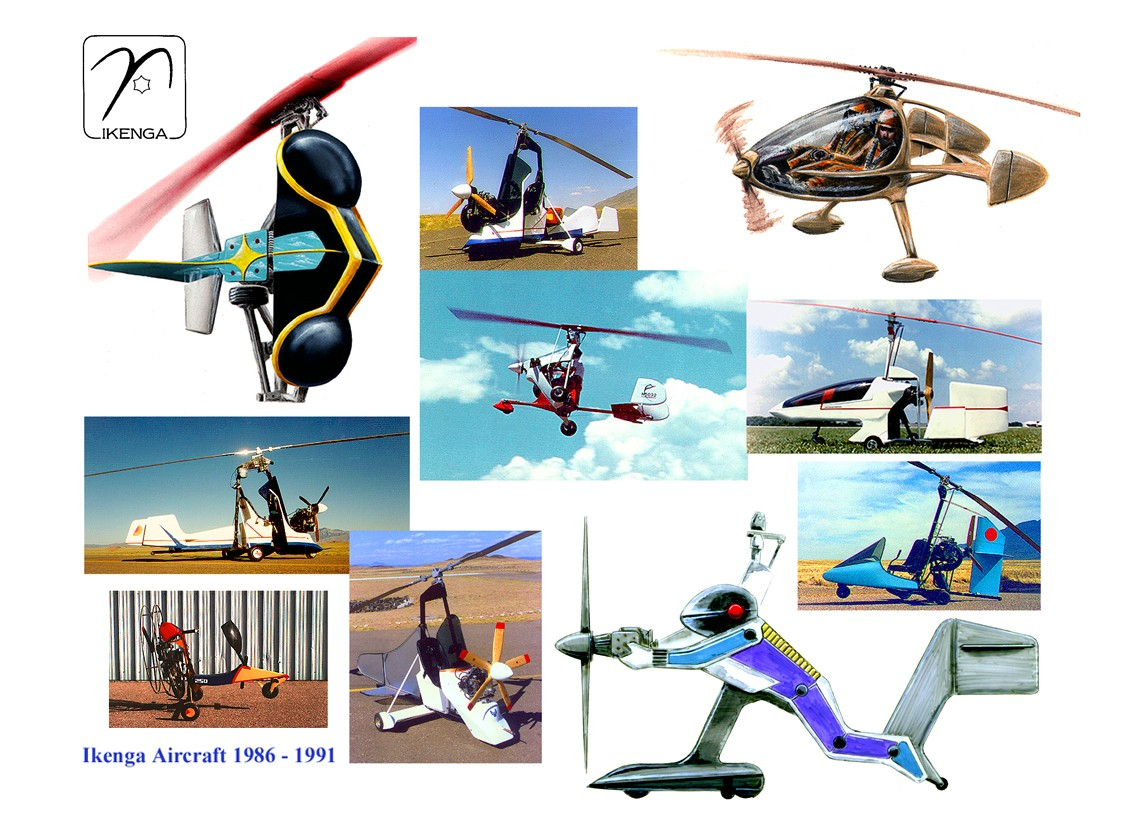
Ikenga Aircraft by David Gittens
Ikenga Aircraft 1985 to 1991 . . . the EZ Bird Paramotor (LL) was completed in 1992 Image courtesy of the David Gittens Personal Archive. All rights reserved by the respective copyright holders.
Winning Big and Succeeding in 1988
The Ikenga first flew in June 1988 from Espanola Airport near Santa Fe, NM in the hands of test pilot Mark Hallet, at density altitudes that would challenge most light aircraft. It performed beautifully.
Immediately after, David swept some of the gyroplane world’s most prestigious honors: Grand Champion Rotorcraft at the Albuquerque International Airshow, Best New Rotorcraft Idea at the Popular Rotorcraft Convention, and Rotorcraft Reserve Grand Champion at the Oshkosh International Airshow.
The recognition came with a mixed asterisk. Some in the aviation community that had mailed David parts and given encouragement sight-unseen were stunned to discover the designer they’d been championing was Black, and some of the same people who judged his aircraft award-worthy balked at presenting the honors to him in person.
David tells that story without bitterness. For every door that closed, he’ll name the allies who held others open: Jim McCutchen, whom David calls the most innovative and creative US autogyro designer of the 1980s, and whose Skywheel rotor system spun atop the Ikenga itself; Bill Parsons, Ed Alderfer, and the retired military pilots and engineers who showed up at his studio unannounced, asking how they could help.
“I have giants in my world,” he says.
His design process defied convention, too. David built intuitively first, then reverse-engineered his own aircraft to produce the drawings the FAA required. And one of his instincts saved his life. The Ikenga’s rotor head sat on a U-shaped chromoly mount that David designed to double as a roll bar. During a taxi test in Albuquerque, the Ikenga Cygnus 21-T aircraft tumbled at speed on the runway, and that cage held. He walked away, rebuilt the airframe, and that rebuilt aircraft, the TX, is the autogyro that now greets visitors at The American Helicopter Museum in West Chester, PA.
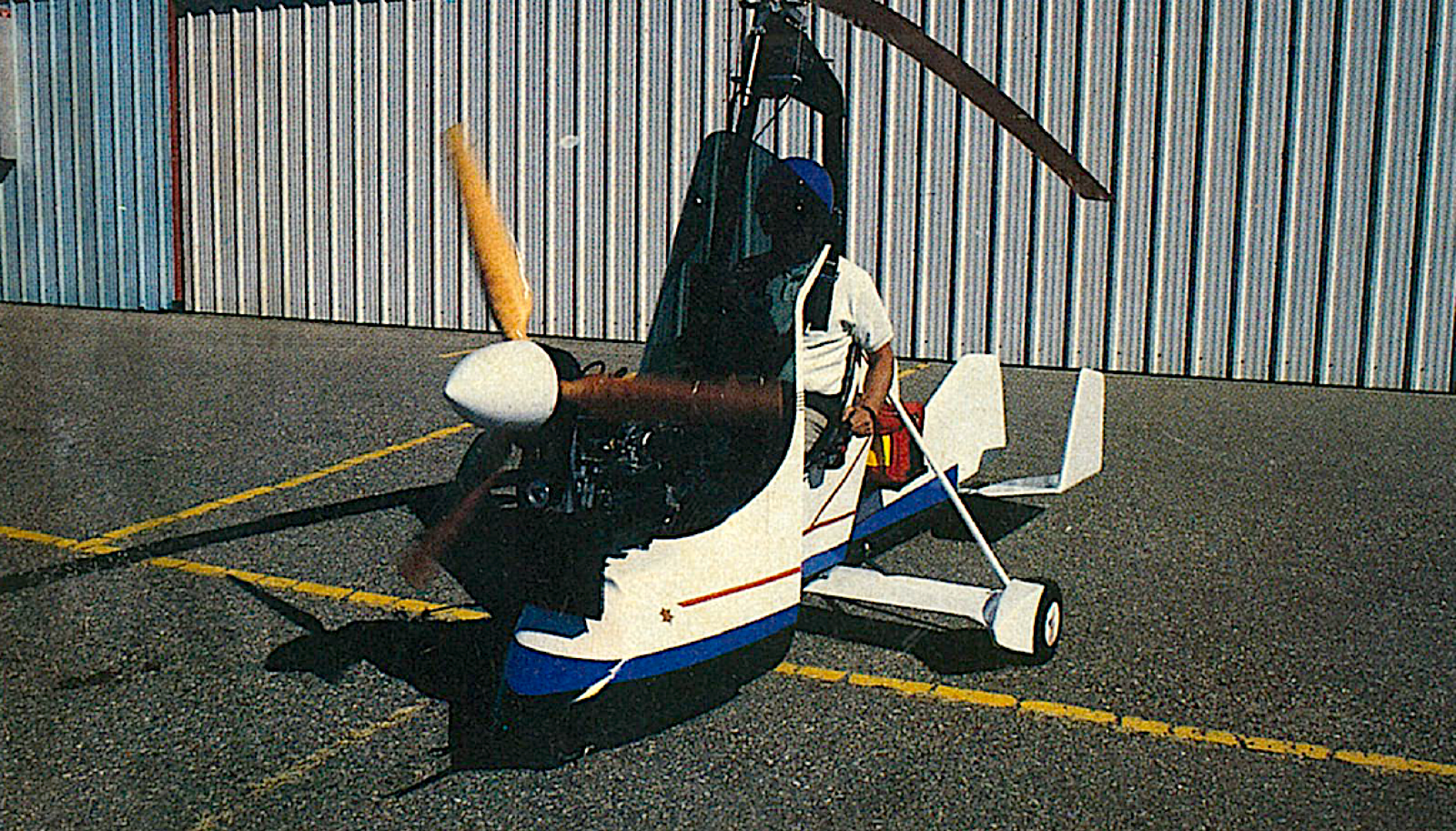
Ikenga Cygnus 21TX, Grand Champion Rotorcraft Albuquerque International Airshow. Image courtesy of the David Gittens Personal Archive. All rights reserved by the respective copyright holders.
From Sarasota to the Museum Floor
In 1994, David donated the prototype Ikenga 530Z to the Smithsonian’s National Air and Space Museum, where it hangs today in the Vertical Flight exhibit at the Udvar-Hazy Center outside Washington. The museum’s own record says it best: the Ikenga stands as proof that independent designers can still make important contributions in a field dominated by government-backed giants.
The TX needed a home worthy of the same legacy, and for years, the place keeping it safe was our studio floor in Sarasota. That’s not an accident of geography. Rob and David are kindred builders, two designers who share the same conviction that the impossible thing is worth making; both have a history with the LA Art Center, and their friendship long predates any museum conversation. When David talks about the people who made his aircraft real, he puts Rob in the same breath as his aviation heroes:
“That’s heart in action, manifesting. No politics. Just a love of the cause and making it happen.”
So when the TX needed a champion, a caretaker, and eventually a shipping crew, there was never any question where that would happen. Sarasota turns out to be a fitting waypoint for an aircraft like this. This is a town that has quietly become a home for world-class design and fabrication, and our studio has spent thirty years here proving that landmark products don’t have to come out of Detroit or Silicon Valley.
A hand-built, award-winning rotorcraft resting between our CNC machines and prototype benches felt less like storage and more like family visiting. When the opportunity arose to place the TX with the American Helicopter Museum, our team handled the work of getting a one-of-a-kind, hand-built rotorcraft safely crated, shipped, and delivered from Sarasota to Pennsylvania.
The ROBRADY team is now working directly with the museum’s director on next steps, including bringing David himself to the museum to see his aircraft on display. It’s the kind of project that doesn’t show up on a capabilities slide, but it sits at the center of why this studio exists.
We spend our days helping innovators move ideas from research to reality. Every once in a while, friendship hands us a different assignment: helping reality find its way into history.
David, for the record, isn’t looking backward. Ask him about the future of rotorcraft and he’ll tell you the world has moved on to drones and autonomy, and that’s fine by him. When a visitor recently asked to take a picture with him, he redirected the camera toward the students he’d been speaking with. They’re the ones inheriting the sky. He jumped off the cliff. He built the aircraft on the way down. A brother in Sarasota helped it land in a museum, where it will prove to the next kid from Brooklyn, and elsewhere, that it can be done.
Learn more about David Gittens here: https://dwij.org/
OnlyHearts.org is used by educators and students around the world and is recommended by the Hawaii Department of Education, The Discovery Museums, Harmony Institute, St. Petersburg, Russia, and JFK University, Buenos Aires, Argentina. It highlights the beautifully articulated insights and thoughts about world peace and the intentions that students are setting to make this a reality.
Donations are open for David’s “Only Hearts” project. Donate here
Created for Sumitomo Heavy Industries of Japan, the Ikenga Cygnus 21P2 autogyro is available to collectors/museums. Contact: dwijveena@gmail.com
More content: