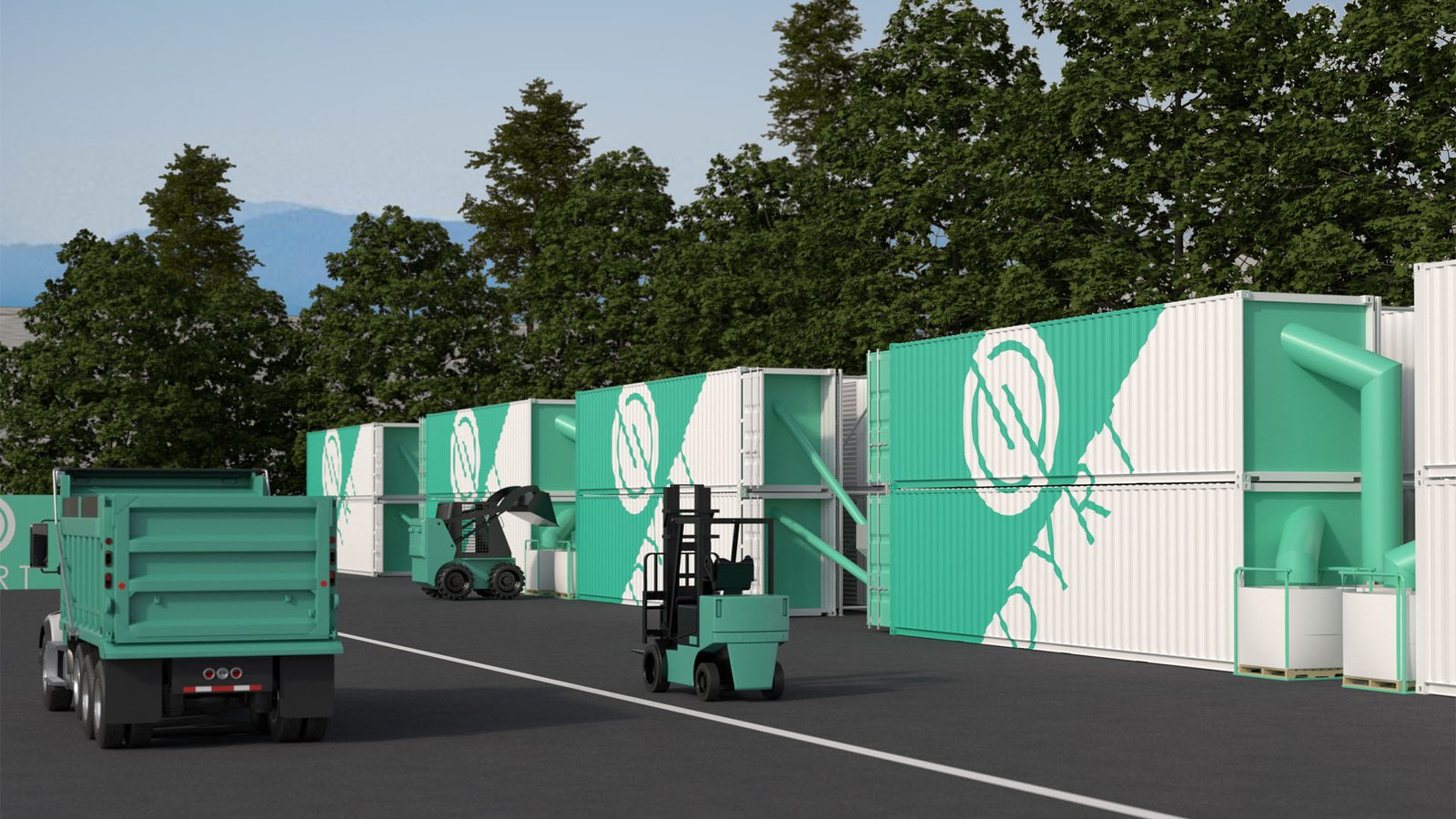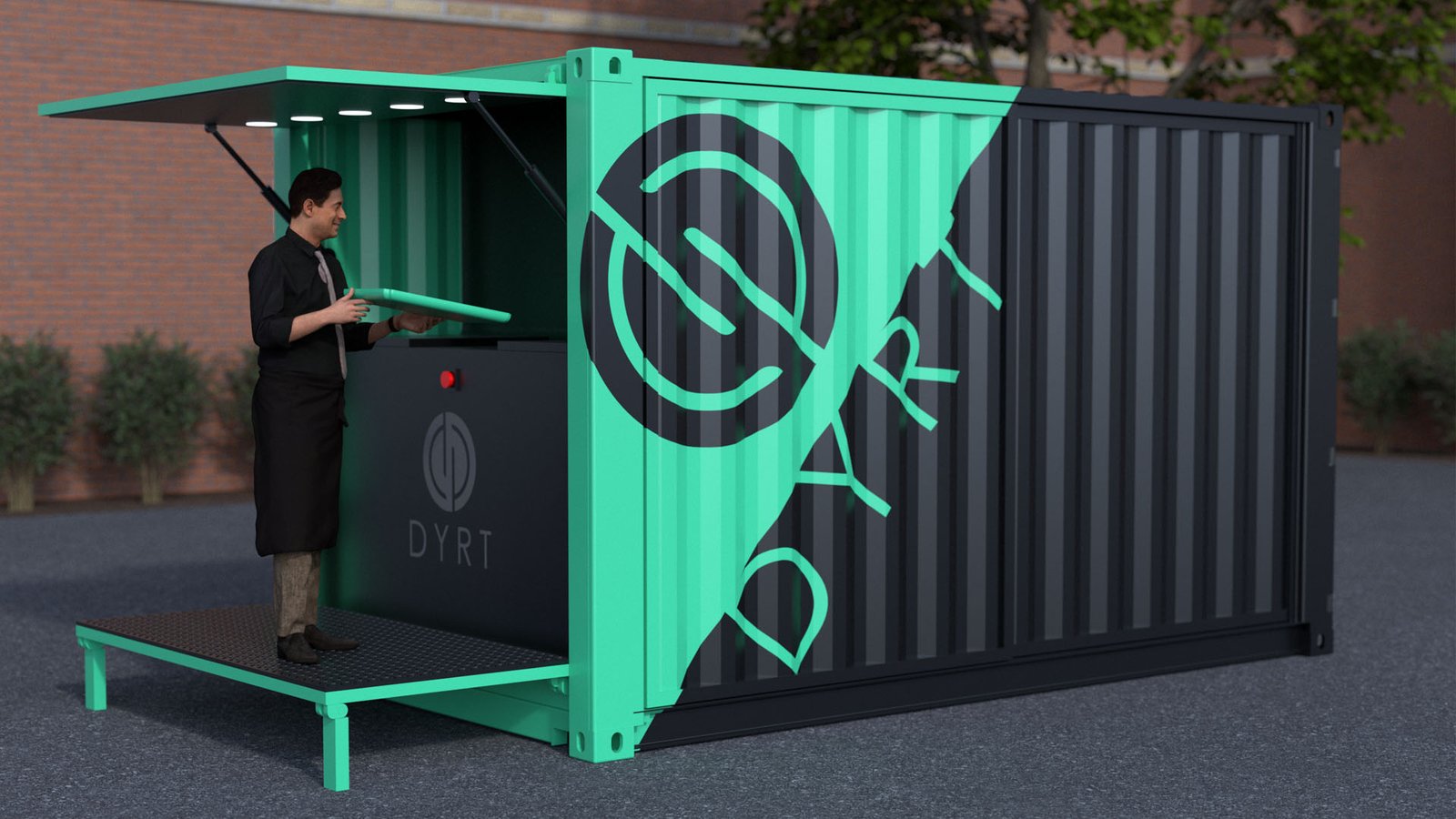
The Dyrt Compost System is a high-capacity, sensor-driven platform that helps cities and large institutions keep organic waste out of landfills and comply with California SB 1383. We partnered with the Dyrt team from concept sketch to pilot deployment, shaping a facility that doubles as a working showroom where visitors watch real compost in motion. The goal is simple: humanize composting, then back it with clear data so operators, regulators, and the public can trust every step.
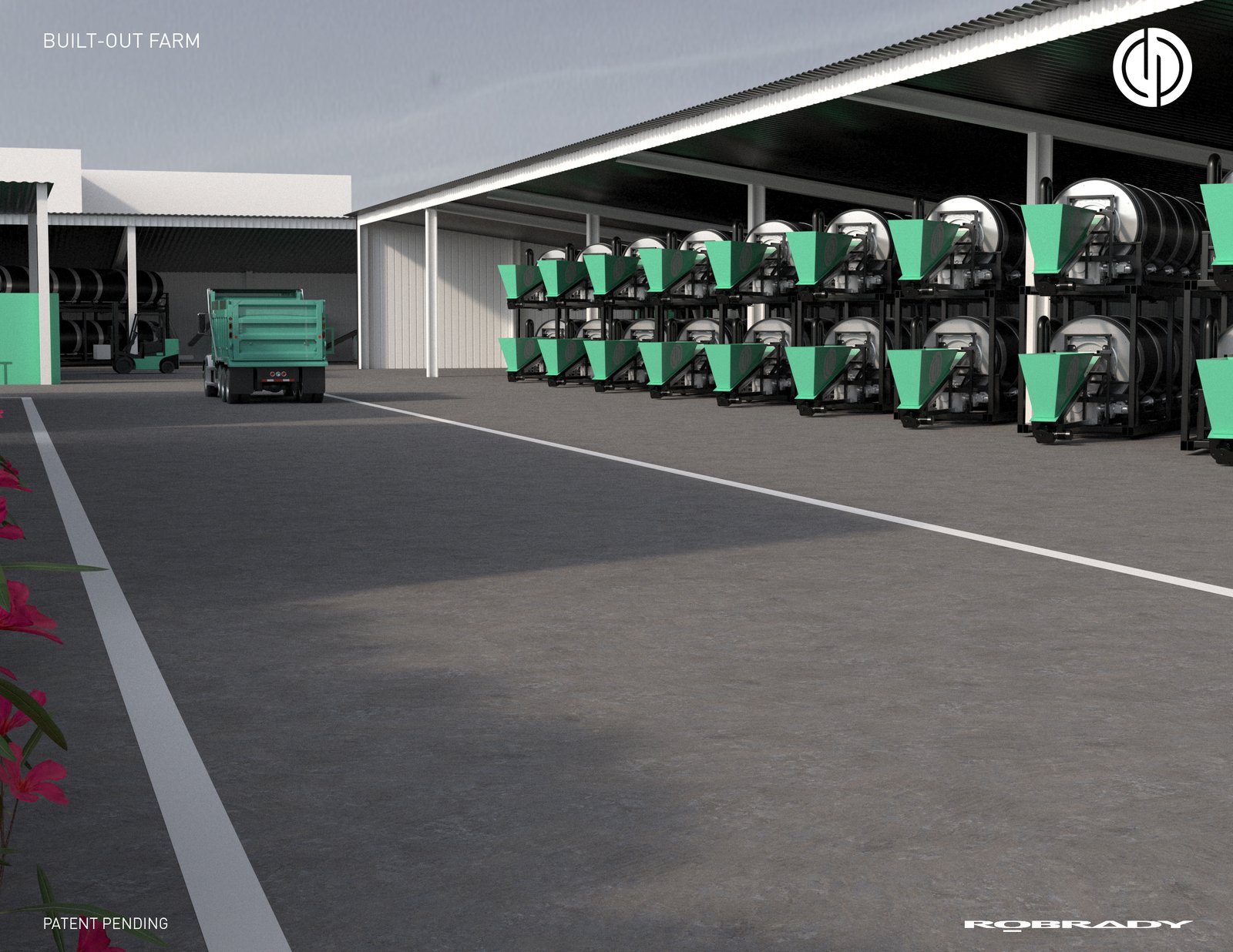
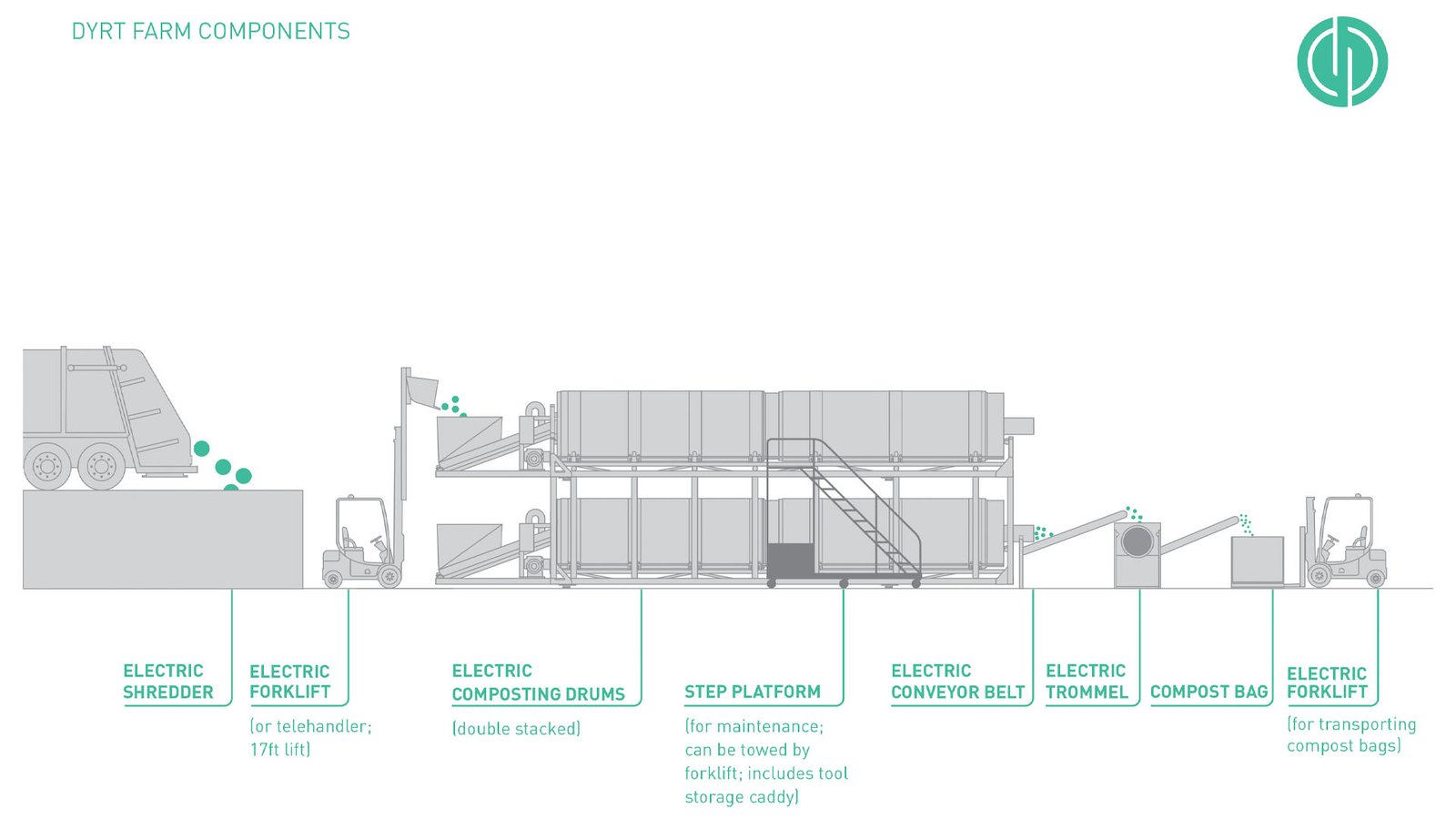
At the heart of the system sits a 35-foot drum formed from recyclable high-density polyethylene. The machine weighs about sixty thousand pounds when fully loaded with compost and does not need to be relocated. An energy-efficient gearmotor—Dyrt’s main power draw—periodically rotates the drum at a slow speed, letting microbes work undisturbed. Internal mixing bars flip the load of food waste and wood pellets, pulling in air, stopping odors before they start. Thirteen sensors monitor temperature, pH, moisture, and nutrient levels.
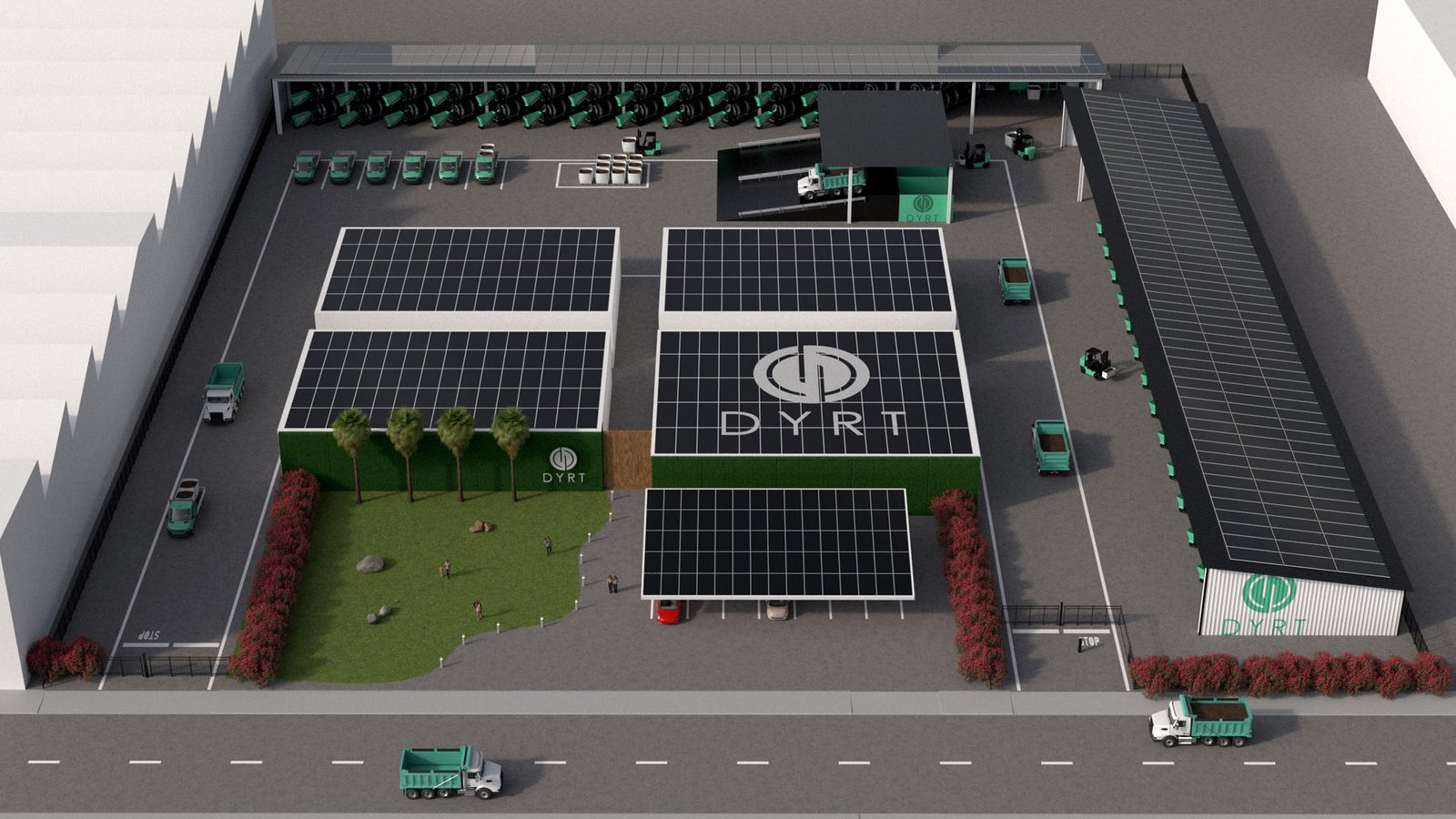
A control loop fine-tunes airflow to keep the compost in its ideal range. The pile reaches 155 °F for pathogen kill and breaks down in just 21 days. With a daily capacity of up to two thousand pounds, one unit serves a campus, resort, or grocery chain in a space about one tenth the size of a traditional windrow. Dyrt makes composting sexy, pairing industrial muscle with clean lines and clear data that anyone can scan in seconds.
A Smarter Way to Manage Waste
Early prototypes aimed at full automation, but cost targets steered the team toward a proof-of-concept path: manual loading with a portable auger. Shredders, fixed conveyors, and closed-loop feeders remain on the roadmap and can be added without re-engineering the core. Finished compost drops into three-foot contractor bags for direct farm delivery. Dyrt crews collect source-separated waste from partner kitchens and grocers while implementing bin-efficiency tracking to optimize bin weight and reduce over-servicing. Edible surplus skips the drum and goes straight to livestock, so more than 99% of what Dyrt handles avoids landfill burial.
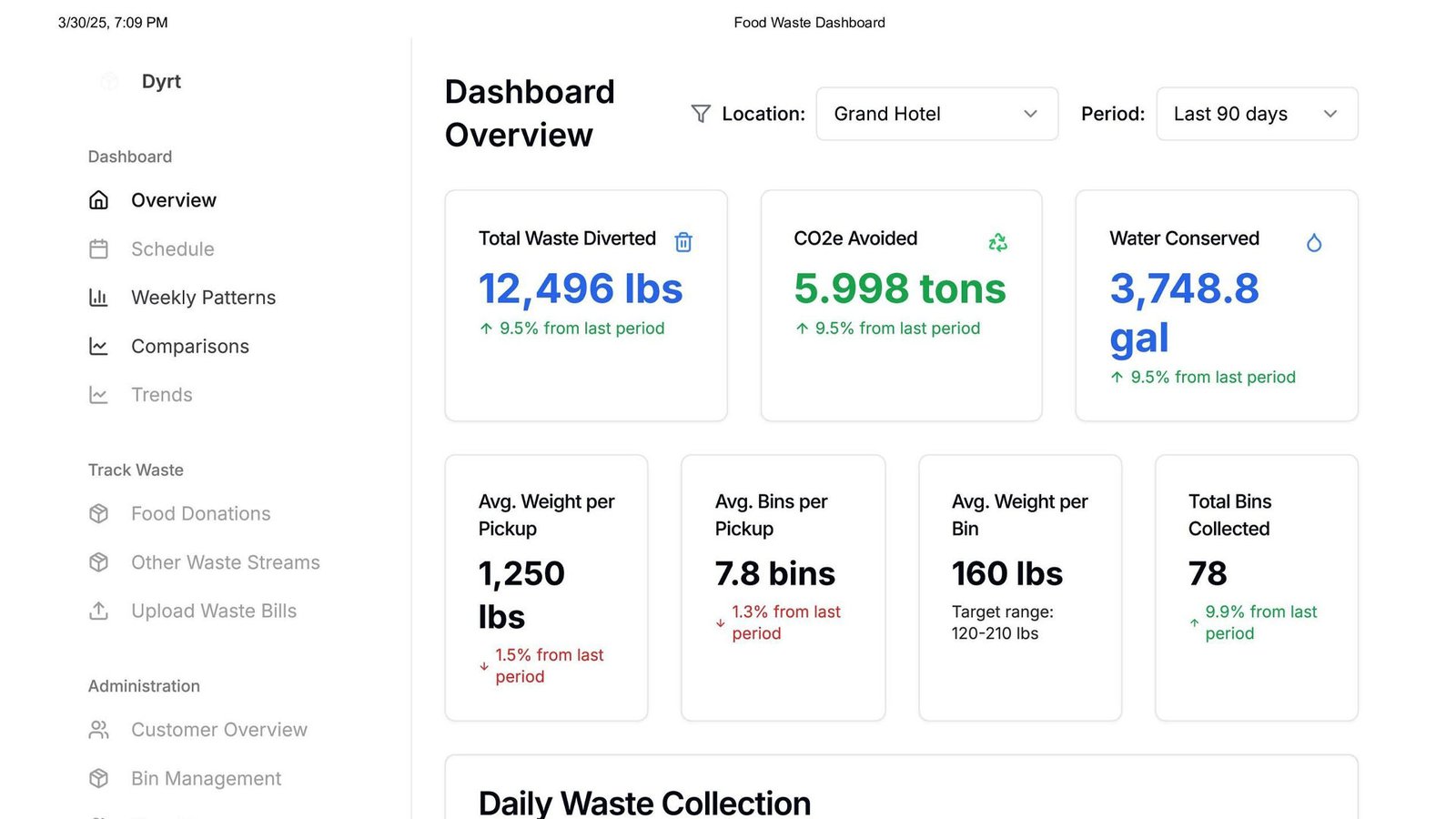
The All-in-One Waste Management Platform
DyrtIQ, the cloud portal, converts raw sensor streams into clear metrics that strengthen both compliance and finance. Managers track waste diverted, methane prevented, and water saved. Weekly charts flag peak disposal times and half-empty bins that drive extra hauls. Automated logs satisfy SB 1383 audits, while donation analytics count pounds of food redirected to animals. The platform stores every record in a secure database, positioning users to claim current and future tax incentives tied to verified diversion.
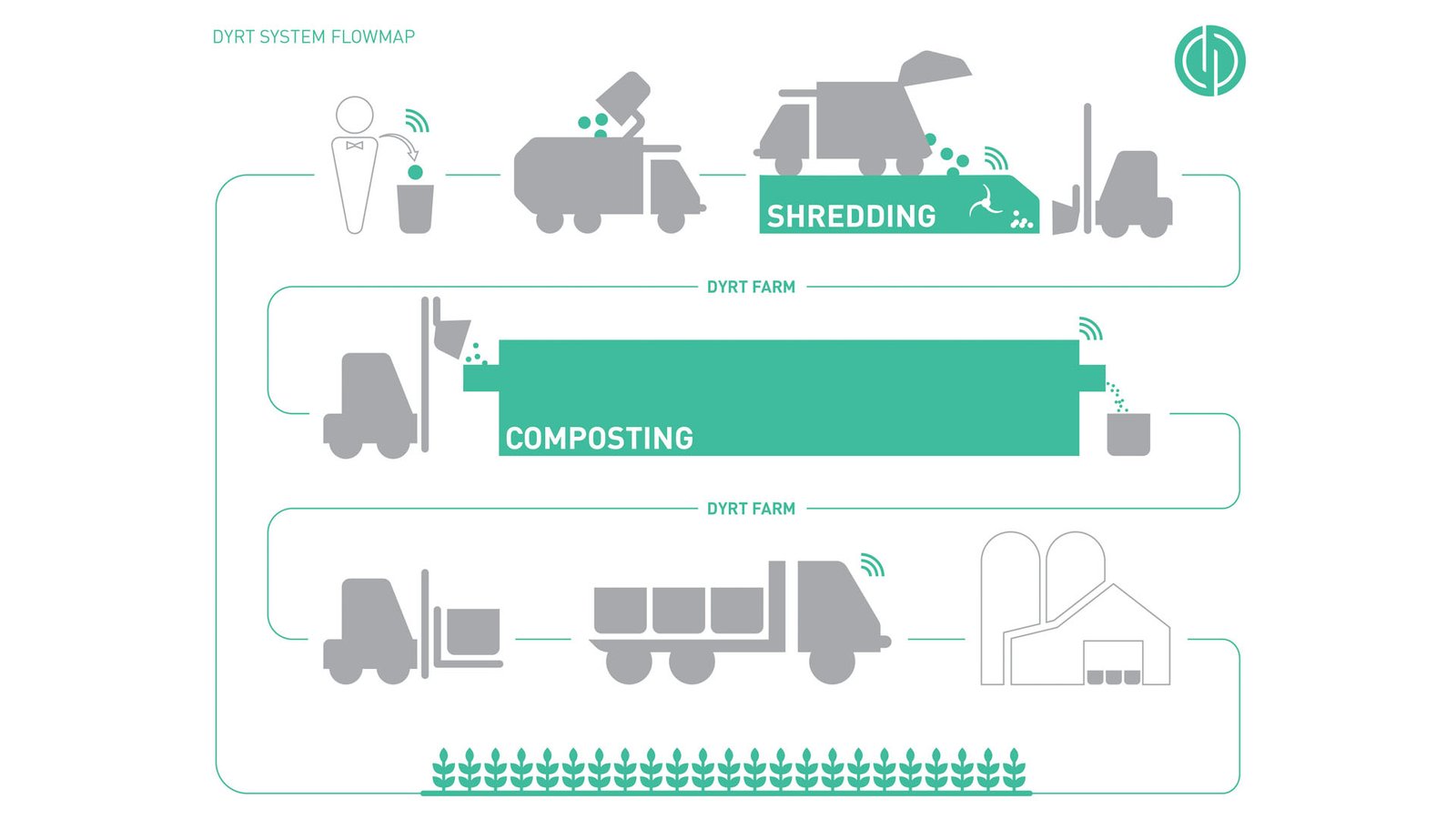
Market response confirms Dyrt’s strategy. Demand already exceeds installed capacity, annual recurring revenue is running ahead of plan, and a recent funding round closed at favorable terms. Momentum is driven not only by regulation but by a story that resonates: a system that turns food waste into soil in three weeks, proves the result with hard numbers, and looks good enough to put on display.
With solid revenue and investor confidence, Dyrt is scaling production while staying true to its core mission: to give businesses a reliable, data-rich way to keep organic waste out of landfills, cut methane, and return nutrients to the soil, showing that responsible design can be as sleek and inviting as any front-of-house feature.